Suntory Whisky at the Noguchi Museum

Last night Suntory, the company that began Japan’s 90-year whisky tradition, held a tasting event at the Noguchi Museum in Long Island City, Queens. The Museum’s outdoor gardens, filled with Isamu Noguchi’s carved stone sculptures, was a perfect setting for it. The crowd enjoyed a tasting of Yamazaki 18-year-old, Hakushu 25-year-old, and Hibiki 21-year-old whiskys — all guided by Mike Miyamoto, Suntory’s global brand ambassador.

Noguchi Museum

Suntory tasting

The host of the event was Suntory USA CEO Toshi Kumakura. He was introduced by Neyah White, one of Suntory’s US brand ambassadors. The other US ambassador, Gardner Dunn, gave an ice carving demonstration, hand-cutting crystal-clear ice into spheres to serve with Hibiki 12-year-old whisky.

Suntory whiskys

Suntory

Suntory whiskys

After the main group tasting, Neyah White was pouring samples of the three whiskys we tried at the beginning of the evening, along with Yamazaki 25, Hakushu 18 and Hibiki 17.

Hakushu Highball

And of course, as is modern Japanese tradition, there were lots of highballs to be had. The Hakushu Highball, served with a smashed mint leaf and sparkling “Premium Soda from Yamazaki,” paradoxically brought out the Hakushu 12-year-old’s smoky flavor. I wasn’t as impressed with the Yamazaki Mizuwari, a simple mix of Yamazaki 12 and Suntory bottled spring water. The Yamazaki’s delicate fruit and wood notes were totally lost to me palate doused with so much ice and water.

Gardner Dunn carving ice

Gardner Dunn carving ice

Hibiki 12 and ice

Amazingly clear ice

Posted in Cocktails, Straight Spirits | Tagged , , , , , , , , , , , , , , , , , , , , | Leave a comment

Are There Too Many Bitters on the Market?

Memphis Barbeque BittersLate last year, I finally resolved to buy a bottle of bitters that I’d been coveting for months. The flavor was The Bitter End’s Memphis Barbeque Bitters and while I was regularly fantasizing about its ambrosial smokey, spicy qualities, I was hesitant to smack down $23 for a product I’d be using drops at a time.

Sure, I’d spent the same amount on Brooklyn Hemispherical Bitters’ Sriracha Bitters. But I wasn’t using it very often. After the initial excitement over such a novel flavor and a few ill-fated experiments, I didn’t use it at all. But I didn’t regret the purchase and I was sure the Memphis Barbeque Bitters from Bitter End would be more practical. I love smoke and I love spice — of course it would be useful.

I found the Barbeque Bitters at Astor Wines & Spirits, at the tasting counter. When I asked for it, the guy behind the counter and I chatted a bit. We sampled a few drops and agreed it was bewitching, but when it came to cocktails the bitters might be used for, neither of us had any ideas. Huh, I thought as I shelled out more than 20 bucks for this two-ounce bottle of chipotle, mustard seed, orange peel, coffee beans, black pepper, allspice, thyme, cumin, bay leaf, and oregano. What do I do with it? This Chipotle Cooler sounded good, and so did The Appalachian. But for some reason I never tried them, instead opting for my own Old Fashioned-based experiments with bourbon, rye, and mezcal, respectively. (They all failed.)

Bitters

So the question is: are there too many bitters on the market to be practical? Are home bartenders lured in by exotic extracts, only to be confounded when it comes to actually using them?

Most bitters seem to be created out of optimistic possibilities rather than necessity. In the end, there are three reasons to buy specific varieties of bitters: Because they’ll be useful (Angostura, Orange, Peychaud’s), because you have a recipe that calls for one, or because they just sound delicious.

Fee Bros Bitters

As cocktail enthusiasts go, I’d guess my collection is about average. My current stock of bitters includes Angostura and Peychaud’s along with a couple bottles made by a friend (a Mexican oregano-driven one and a spiced apple one) and:

Fee Brothers
Old Fashion Aromatic Bitters
West Indian Orange Bitters
Aztec Chocolate Bitters
Rhubarb Bitters
Celery Bitters
Peach Bitters

Brooklyn Hemispherical Bitters
Meyer Lemon
Sriracha

The Bitter End
Memphis Barbeque Bitters

Regans’
Regans’ Orange Bitters #6

The Bitter Truth (Travel Set)
Old Time Aromatic Bitters
Jerry Thomas’ Own Decanter Bitters
Orange Bitters
Celery Bitters
Creole Bitters

The only thing crazier than having a stock of nearly 20 kinds of bitters is how much I actually need a good deal of them. I have three different twists on orange bitters and I use them all. One style of celery bitters is spicy and the other is savory. The chocolate bitters gets used so much I’m thinking I need to branch out and try a couple other styles of chocolate (mostly for Oaxacan Old Fashioneds). And my extended wish list includes a handful of flavors from Bittercube (particularly Cherry Bark Vanilla), Angostura’s Orange Bitters (often twice the price of the traditional Angostura!), Maya Mezcal Bitters from Bitter Tears, a couple types from Bitters, Old Men including Smoke Gets In Your Bitters and Gangsta Lee’n Bacon and Smoked Almond Bitters (wow!).

Travel Bitters

So in conclusion, yes, there are way too many bitters on the market right now. Far more than can possibly be useful to even the most adventurous and active home bartender. I’m sure that we’re close to peak bitters, and that complex cocktails with obscure ingredients will begin to seem, well, too complicated.

And yet in the meantime, I’ll keep buying them for the excitement of possibilities and the hope that I find another classic that becomes an essential ingredient in the perfect cocktail.

My advice: Look for bitters based on your own cocktail needs and think twice about those novelty flavors. Buy variety packs and travel-size bottles when you can — it’s cheaper in the long run. And finally, consider splitting larger bottles of less useful bitters with friends by decanting into multiple smaller bottles.

Posted in Bitters, Cocktails | Tagged , , , , , , , , , , , , , , | 4 Comments

Bäska Snaps: Internationally Bitter

Baska SnapsBäska Snaps med Malört is an accidentally international spirit: it’s a Swedish recipe produced for an American company by a French distiller. And strangely, it makes perfect sense. The American company, Bittermens, is known for its bitters. The Swedish recipe is (roughly) a sweetened aquavit that’s infused with wormwood, which is where the French come in. Who better to work with wormwood than an absinthe distillery?

Snaps, or schnapps, is what Scandinavians call aquavit and similar spirits. The Bäska part means bitter. The full name of the product contains a word Chicago drinkers will be familiar with: Malört. Jeppson’s Malört is an astonishingly bitter 70 proof spirit that’s been a Chicago institution since 1934. (For a great background on Jeppson’s, read this Wall Street Journal story). Bäska Snaps is similar to Jeppson’s Malört, but to be blunt, it tastes much, much better. Both products trace their heritage to a Swedish tradition of wormwood-infused spirits. Reimersholms, a Swedish company that makes a few kinds of aquavit (including O.P. Anderson), also makes a bitter one called Bäska Droppar, but it may be the only company producing wormwood aquavit in Sweden right now.

Bäska Snaps, which is 80 proof, is meant to be served cold, as it says on the bottle in Swedish (Serveras Kyld!), but it tastes great at room temperature. It’s very bitter, but it’s sweetened too. It has a clear herbal depth to it that Jeppson’s Malört does not—probably from the aquavit base. Despite the wormwood (less than 10 parts per million of thujone, for the absinthe nerds out there), it doesn’t taste much like absinthe. The flavor is actually a little closer to the Fernet style of bitter spirits.

I asked Avery Glasser, who founded Bittermens with his wife Janet, some questions about Bäska Snaps via e-mail.

Avery GlasserWhat was the inspiration behind Bäska Snaps? As a bitters and bitter liqueur formulator and producer, I’m always thinking about new products and new ideas. About a year ago, Janet and I were in Chicago and of course we had some Malört. That reminded me of a bitter schnapps that I had a long time ago when we were living in Germany… so I did a little research and found out that the Malört is a derivative of the traditional bitter schnapps of Sweden. The more research I did, the more I learned that there is a real vibrant tradition of people making their own bitter schnapps by taking aquavit and infusing it with a variety of botanicals (almost always including wormwood)—but only one major producer of it commercially.

To me, it’s an endangered style—at least commercially endangered—and it’s too important to lose, as essentially it’s the Scandinavian equivalent to the classic Italian amari. So, when fate put me in contact with one of the oldest producers of absinthe in France, I realized that it was something that I was essentially compelled to make.

How is it made? Is any of it produced in Sweden or is it all made at once in the French distillery? We make everything from scratch at the French distillery. We start from neutral spirits and first create a traditional herbal aquavit with caraway, rhubarb, licorice, citrus and other botanicals. We then filter it out and blend in distilled wormwood, dilute it, and finally sweeten it with a touch of beet sugar.

Was it made for the European market and then imported, or was it made for the U.S. and distributed in Europe as well? Though we always thought of it as a product we would like to see in America, we designed it specifically for Europe with the idea of making something that captured the standard Swedish palate. We started bringing it into the U.S. a few months after it launched in Europe.

Why the liter bottle instead of the U.S. standard 750ml? Part of it is that we wanted the product to be very affordable, and the cost of the 1-liter glass bottles was actually better than the 750ml bottles, and on top of that, there was a matching 500ml bottle which we use in Europe. Considering that it’s traditionally served cold and in shots, it meant that a single bottle would last a bar a bit longer as well.

What is distribution like in the U.S.? We’re pretty much available nationwide. If you take the control states out of the equation (where we are available through special orders with direct representation in NH, VT, ME, WV), we are available today in NY, MA, RI, MD, DE, DC, FL, SC, LA, IL, CA, NV, AZ and WI. We’ll be in CO, NJ, CT, MS, MN, MI and TN within the next 30-60 days. We always keep a current list online.

Who do you think the customer for this is? Is it the absinthe guy? The aquavit fan? Or the Fernet Branca enthusiast? All of the above and more. We’re seeing adoption in cocktail bars, at absinthe bars, at dive bars and in fine dining (especially in Scandinavian themed restaurants).

How are people drinking it so far? Straight and chilled (and very often just straight and room temperature), though bars like Bad Decisions in Baltimore are already coming up with some great cocktails using it. When I put it together, I didn’t have any cocktail aspirations for it, but then again, when the monks made Chartreuse, they weren’t thinking about cocktails either. I’m happy to see bartenders reaching for it and using it both as a modifier and as a primary spirit.

Bad Decisions is going through so much of it that most likely by the end of the week, they’re going to be our first bar with Bäska Snaps on tap. A second bar in Florida will have their tap by the end of the month and a few more bars around the country have asked about a tap program.

For food pairings, I’m a big fan of serving this with smoked fish and/or caviar, or with fried foods like pierogis and pelmeni.

Will there be other similar products coming soon? Maybe an aquavit? Anything’s possible…

Bäska Snaps med Malört is 80 proof (40% abv) and comes in 1-liter bottles for around $35. Buy online at DrinkUpNY or check here for updated lists of retailers and here for distributors.

Posted in Cocktails, Novel Ingredients, Straight Spirits | Tagged , , , , , , , , | Leave a comment

The Old Bay Ridge Cocktail

Aquavit is notoriously difficult to mix. Maybe it shouldn’t be — it’s not so far off from gin — but ask your average cocktail enthusiast for the name of a good aquavit cocktail and he or she might pause and say, “Hmm. Bloody Mary?”

We’re still trying to figure it out. And while almost all aquavit has caraway in common, there’s a fair amount of diversity in flavor profiles, which can make it even more difficult: what may work with one brand of aquavit may be a disaster in another.

The first modern classic to emerge among aquavit cocktails is surely the Trident — Robert Hess’s Negroni-like concoction of aquavit, dry sherry, Cynar, and peach bitters. For the second modern classic, I nominate the Old Bay Ridge by cocktail historian David Wondrich.

Old Bay Ridge

Like the Trident, the Old Bay Ridge is a twist on a classic, in this case the humble Old Fashioned. It’s a simple drink but the combination of flavors is so perfect and harmonious that you almost wonder if there are more ingredients in there. It’s one part rye whiskey, one part aged aquavit, and a dash of Angostura bitters with a sugar cube. It’s the kind of simple combination that makes you think there are perfect partners for every odd spirit. But how does one find them?

You Don't Have To Be JewishI asked Wondrich via Twitter how he came up with the combination of rye and aquavit and his answer made me laugh: “Levy’s Jewish rye bread, seeded with caraway. An NYC childhood staple of the 1970s.” Of course! Caraway and rye.

Levy’s Jewish Rye bread is probably most famous for its 1957 ad campaign, “You Don’t Have to Be Jewish to Love Levy’s Real Jewish Rye.” It was conceived by the legendary Doyle Dane Bernbach ad agency, and it showed various non-Jewish people eating Levy’s Jewish Rye.

Wondrich uses Linie aquavit, the caraway-forward Norwegian brand aged in barrels that are carried by ship across the equator twice. I’m not sure what brand of rye he uses but I’ll wager it’s Rittenhouse Bonded Rye, the 100 proof stuff.

I’ve been making Old Bay Ridge cocktails for the last week and I can’t get enough of them. The rye and sugar mellows the caraway, making it a great Old Fashioned variation to sip.

Old Bay Ridge

1oz Linie Aquavit
1oz Rittenhouse Rye
Dash of Angostura Bitters
1 Sugar Cube

Build the cocktail in a lowball or rocks glass. Muddle the sugar cube with two dashes of bitters and add the spirits. Stir to disolve the sugar and add ice; stir again until cold, about 30 seconds. Discard the ice. If you’re serving the drink with ice, add a large ice cube or ice sphere once the cocktail has been chilled (you want to minimize the dilution at this point). If you’d like a garnish, try a lemon peel or orange peel.

I’m looking for more great aquavit cocktails. Know of any you think qualify as modern classics? Or any new aquavit cocktails that you think will (or should) endure?

Posted in Cocktails, Mixologists, Novel Ingredients | Tagged , , , , , | 2 Comments

What Happened to O.P. Anderson Aquavit?

Before I moved to New York from Minnesota, I could go into almost any Twin Cities liquor store and see at least three aquavit brands: one Danish, one Norwegian, and one Swedish. If it was a well stocked shop, there might be a two kinds of the Danish brand Aalborg and two or three Swedish brands. One of those Swedish aquavit brands was O.P. Anderson. In New York, I was pleased to find much the same situation at Astor Wines & Spirits. They stocked just about everything that a good Twin Cities shop had and even labeled a whole shelf section Aquavit, right between Vodka and Gin.

O.P. AndersonBut then something changed. About five years ago, all the Swedish brands disappeared from the shelves without warning. Suddenly there was no more O.P. Anderson, no more Herrgårds or Skåne.

I was reminded of O.P. Anderson when a friend mentioned he’d seen a couple of old bottles in a Minneapolis liquor store. “Buy them!” I said (he did, and at a mere $20 each after tax). They must have been sitting there since 2007. So what happened?

This is a long story, so before I get into the details, I’ll summarize it: O.P. Anderson was owned by the Swedish liquor company that owned Absolut and has changed hands a couple of times. It’s now owned by Altia, a Finnish company.

Now the details: In March 2008, liquor giant Pernod Ricard bought Absolut Vodka’s parent company, Vin & Sprit AB (V&S), for $8.34 billion. Pernod was battling rivals Diageo (the biggest liquor giant of all dropped out when it formed a partnership with Ketel One), Bacardi, and Beam Global for Absolut. The deal closed in July 2008. Pernod Ricard then divided the Sweden-based V&S business into two units, one for Absolut and one called Pernod Ricard Nordic for all the local Scandinavian brands. Two of those brands were O.P. Anderson and Skåne Akvavit.

It was around this time—2008—that O.P. Anderson disappeared from American shelves. It’s a safe bet that Absolut, er, Pernod Ricard Nordic, decided to save money by halting the importation of its smaller Swedish brands to the U.S.

Two years later, in February 2010, Altia Corporation, a liquor company owned by the Finnish government, acquired some Nordic brands from Pernod Ricard, including O. P. Anderson and Skåne Akvavit.

I reached out to Altia to see if they had any plans to bring O.P. Anderson back and got a reply from Mats Nilsson, their commercial director for travel, retail and export.

“The reason that export didn’t continue was simply [because volume was too low] and not really worth it,” he said in an e-mail. “For us to re-launch O.P. Anderson in the U.S. again we would have [to have] a plan of volume and investment where we can see that there is a good opportunity.”

That makes sense, but I would argue that now there is a good opportunity. Think about this: there are currently more American aquavit brands in the U.S. market than there are Scandinavian ones:

  1. Krogstad from Portland, Oregon
  2. North Shore from Chicago
  3. Gamle Ode from Minneapolis
  4. Sound Spirits from Seattle

And at least two of those, Krogstad and Gamle Ode, believe in the market enough to launch more than one style of aquavit.

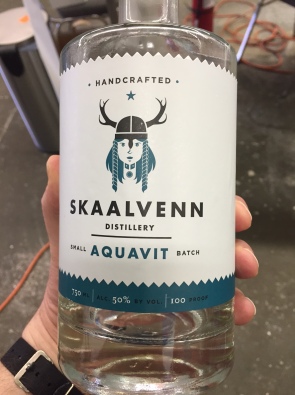
For imports, we have only Linie and Aalborg left in the market. It makes one wonder how much of the surge in American aquavits had to do with the disappearance of Scandinavian brands. And how much potential O.P. Anderson and others might have in re-entering the U.S. market.

On a related note, those Swedish brands weren’t the only ones Pernod Ricard got in the V&S deal. Aalborg, the Danish brand, was also part of it. In the middle of last year, Pernod Ricard announced that it was selling off more Nordic brands, this time to Arcus Gruppen, the Norwegian liquor company that owns Linie Aquavit. The $126 million deal included Aalborg and another Danish aquavit brand, Brøndums, along with the Danish bitter Gammel Dansk and a German aquavit brand called Malteserkreuz.

Posted in Cocktails, Straight Spirits | Tagged , , , , , , , , , , , , , , , , , , | 2 Comments

Gamle Ode Holiday Aquavit

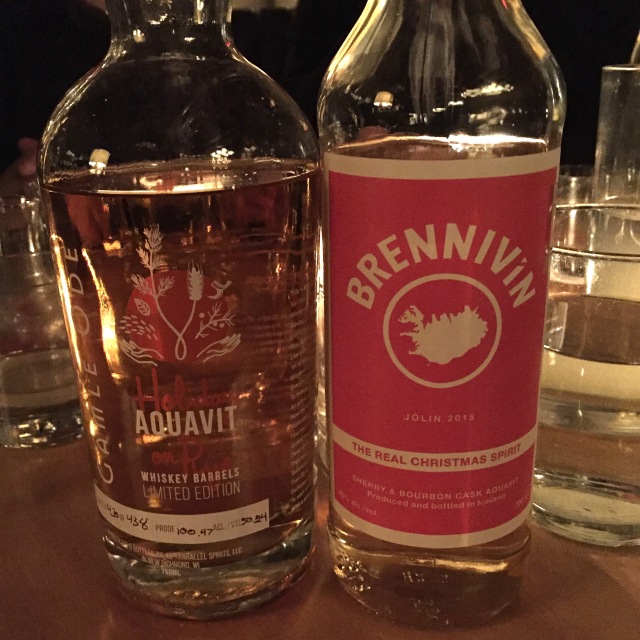
Gamle Ode Holiday Aquavit Since I interviewed Mike McCarron, founder and creator of Gamle Ode Aquavit in November, I’ve gotten to know him a little better and—full disclosure—I’ve done a little work for him and his brand. It’s been exciting for me both as an aquavit aficionado and a Minnesotan to be a part of his story, however small.

McCarron started Gamle Ode in Minneapolis last July. The company’s first product, a dill aquavit (perhaps the first of its kind to be produced outside of Scandinavia) is distributed in Minnesota and Wisconsin. It’s distilled by 45th Parallel Spirits in New Richmond, Wisconsin, about an hour from Minneapolis.

I was lucky enough to be among the first consumers to taste Gamle Ode’s newest product, the Holiday Aquavit, back in December, and I’m proud to be one of the first to write about it. Its story is fascinating to me because it wasn’t easy to make. At first a few things went wrong, and then those setbacks were used to create something new and wonderful.

But before I get into the story behind it, let me first say that it’s incredibly delicious. Like Gamle Ode’s flagship product, it’s made with dill, caraway, and juniper. Unlike the standard formulation, the Holiday Aquavit has orange peels, mint, and allspice added to the mix. That and it’s aged in barrels that held wine. It’s closer to the barrel-aged style of aquavit you see from Linie and the Jubilæums aquavit from Aalborg than the clear, taffel style but, it is uniquely Gamle Ode. The dill and caraway are still detectable, but there’s more going on; I was reminded a little of Chartreuse. But there’s also that depth of flavor that can come only from a barrel. The people I’ve shared it with have been impressed with the complex layers of flavor. If ever there was an aquavit meant to be sipped like cognac, this is it.

Holiday Aquavit: The Background

While seasonal beers are common in the U.S., seasonal spirits are much less common. Scandinavia isn’t like that. With both beer and aquavit, seasonal expressions are typical. Many Scandinavian aquavit brands release Christmas, or Jule, versions every year (Jule aquavits from Denmark’s Aalborg and Norway’s Gilde were two of McCarron’s inspirations). They’re meant to be gifts and treats. Unfortunately, those products are rarely available outside of their home countries and they’re very expensive.

McCarron had planned from the beginning to release seasonal and special versions of aquavit. The first one, the Holiday Aquavit, was to be a November release and the next one, to be called Celebration Aquavit, would be earlier in the year. Each will be annual, limited runs—the Holiday Aquavit is 600 bottles. And like any small batch spirit, there will be some variability each year. However, this run of the Holiday spirit will be hard to top: its production was extremely difficult and labor intensive. Gamle Ode’s distiller, 45th Parallel, isn’t likely to go through so much next time—for better or worse.

Better Than Planned

The Holiday Aquavit didn’t start out as such. “It was born out of a failed dill production run a year ago. It had great dill aroma but instead of a dill taste it was caraway-forward,” McCarron (pictured below at left with Paul Werni) explains.

Mike McCarron and Paul Werni“[45th Parallel distiller] Paul Werni was proud of getting what he called a ‘clean distill.’ The smell of dill filled his distillery and the fragrance was incredibly floral and fun. But a few days later, when we blended it down to 84 proof and sampled it, we were stunned to find it tasted heavily of caraway! The dill aroma was there but its flavor was missing.”

This was actually the first large-scale attempt McCarron and his partners at 45th Parallel made, and its failure to capture the flavor profile they expected was heart breaking. “Paul then tried a second infusion and re-distillation to save it, but with no luck.”

With hundreds of liters of twice-distilled spirits—which were now remarkably smooth—McCarron realized they could save the batch by using it as a base for the Holiday Aquavit, something he didn’t think he’d have the chance to work on until further down the road.

“It was failure as a ‘dill’ aquavit, but it was very good booze; and the challenge became what to do with it given that I only had one label in the works at the time,” he recalls. “But I had two more aquavits (the Holiday and Celebration) in mind for later development, so it forced me to move faster on the Holiday. It turned out to be perfect timing since moving early actually meant moving right on time to get everything set and in the barrels for the six months aging the Holiday required to be considered finished. It was ‘failure’ that actually was kismet, a fate that resulted in something better than what was originally planned.”

To turn it into Holiday aquavit, McCarron and Werni re-infused it again with the Christmas flavors of orange, allspice, and mint. Then they re-distilled it a third time and put it into barrels last May. The two 60 gallon oak barrels, which were already used to age wine, came from a local wine producer, Hastings, Minn.-based Alexis Bailly Vineyard. The spirits sat in the two barrels for more than six months.

“We pulled it from the barrels in December, when it tasted great; we worried it might change and we thought we would be able to sell it then,” McCarron said.

Gamle Ode Barrel

But the label approval from the TTB (the government’s Alcohol and Tobacco Tax and Trade Bureau) didn’t come until after the New Year. Consider this Holiday Aquavit a late Christmas present. Or an Easter treat. Or, do as McCarron does: “We should have a holiday every week, to share with and show appreciation of family and friends,” he says. And why not?

Get it While You Can

I can say without reservations that this is a remarkable spirit, the likes of which won’t be produced ever again. It may not have made it stores for Christmas, but it was worth the wait.

“All I know at this point though is it is unlikely that we or any other producer will intentionally duplicate the process: to do three distillations, two separate and full infusions, and to start with 1,000 liters and end with 450 liters cuts way deeper than anyone cares to make cuts,” said McCarron. “It is much more handling than any craft or major distillery can justify doing for $30 a bottle. My advice is to buy some and savor it like a fine Scotch, because no one will ever replicate this, at any price.”

Gamle Ode Holiday Aquavit ($30; 42% abv) will be available in Minnesota and Wisconsin liquor stores in the next couple of weeks.

Posted in Cocktails, Straight Spirits | Tagged , , , , , , , | Leave a comment

Apple Brandy and Whiskey, Three Ways

I’ve been in a months-long straight spirits phase, enjoying bourbon and rye neat rather than mixing any cocktails. It started last summer when I got weary of complicated cocktails and the frustration of missing obscure ingredients or unique bitters. And then I got so busy that spending ten minutes crafting a perfect cocktail wasn’t fun—simply pouring a glass was much more rewarding.

I’m coming out of that phase now and what’s pulling back to cocktails is a handful of simple twists on classics, all made with a combination of whiskey and apple brandy.

Rittenhouse Rye and Laird's Apple Brandy

It started with cocktail writer Warren Bobrow’s shrub, the General Stark’s Battalion Shrubb Cocktail. When I happened upon this recipe on the Drink Up NY blog, I was thrilled to see that I had all the ingredients at home already. A shrub is a very old class of cocktail, based in food preservation—mixing fruit with sugar, vinegar, and sometimes alcohol made it last longer. I generally think of a shrub as any cocktail with a mix of sweetened vinegar in it but some cocktail historians may quibble with that. Bobrow’s recipe is a very simple apple cider vinegar and maple syrup mix. Add to that a bit of apple brandy and whiskey (Bobrow calls for bourbon, specifically Four Roses, but I’ve tried it with Rittenhouse rye) and some bitters and you have a complex mix of flavors. If you’ve never tried vinegar in a cocktail before, it’s surprising how well it works. Think of it like lemon juice or any other acid. As long as you balance it with some sweetness, it’s quite nice. (See also the Bufala Negra cocktail with bourbon and balsamic vinegar.)

Lairds and Rittenhouse ManhattanA week later, I saw a story about Manhattans in the Minneapolis Star Tribune. Jesse Held, a bartender at Parlour in downtown Minneapolis, makes his Manhattans with a combination of Laird’s bonded apple brandy, Bulleit rye, Antica Formula sweet vermouth, cinnamon and Bittercube Blackstrap bitters. Again, that combination of sweet appley brandy and spicy rye really works. I think rye works a little better with apple brandy than bourbon would because of that spicy characteristic (bourbon tends toward the sweeter side). I tried this at home (leaving out the cinnamon) with Laird’s, Rittenhouse, Antica Formula and plain old Angostura bitters. Delightful.

Once I tried that, I realized the apple brandy and rye combo may be suitable for one of the simplest cocktails of all: the Old Fashioned. It worked very well. In fact, when I gave my wife a sip, she preferred the Old Fashioned to the Manhattan. I’m sure this has been done by many bartenders before, and that someone has named it along the way. Whatever you call it, it’s a fine take on a simple classic.

Here are my slightly modified versions (I’ve changed some proportions to suit my taste and substituted rye for bourbon in the shrub and Rittenhouse for Bulleit in the Manhattan) of the three apple brandy and whiskey cocktails, all of them using Laird’s and Rittenhouse. Note that both the rye and the apple brandy are 100 proof (50% abv). Higher alcohol spirits are a bit easier to work with, dilution-wise.

General Stark’s Battalion Shrubb Cocktail

1.5oz Laird’s Bonded Apple Brandy
1oz Rittenhouse Bonded Rye
1oz maple syrup (preferably the darker Grade B variety)
.5oz apple cider vinegar
2 dashes Bitter Truth Jerry Thomas Bitters

Parlour Manhattan*

1oz Laird’s Bonded Apple Brandy
1oz Rittenhouse Bonded Rye
.5oz Carpano Antica Formula sweet vermouth
2 dashes Angostura bitters

Old Fashioned**

1oz Laird’s Bonded Apple Brandy
1oz Rittenhouse Bonded Rye
2 dashes Angostura bitters
1 sugar cube

*I’m torn between a half ounce of Antica and three-quarters of an ounce. Closer to a half ounce makes the Manhattan a bit dryer on the palate.

**As a side note, check out Parlour’s version of the Old Fashioned on their menu: it uses a combination of Old Grand-Dad 114 bourbon, which is a high-rye content bourbon, and Old Overholt rye. Another notable detail: instead of sugar or simple syrup, Parlour uses Piloncillo, an unrefined Mexican style of sugar.

Posted in Bartenders, Cocktails | Tagged , , , , , , , , , , , , | Leave a comment